Our Blogs
Latest Articles & Insights
Blogs
Speed & Red-Light Enforcement Systems in Qatar
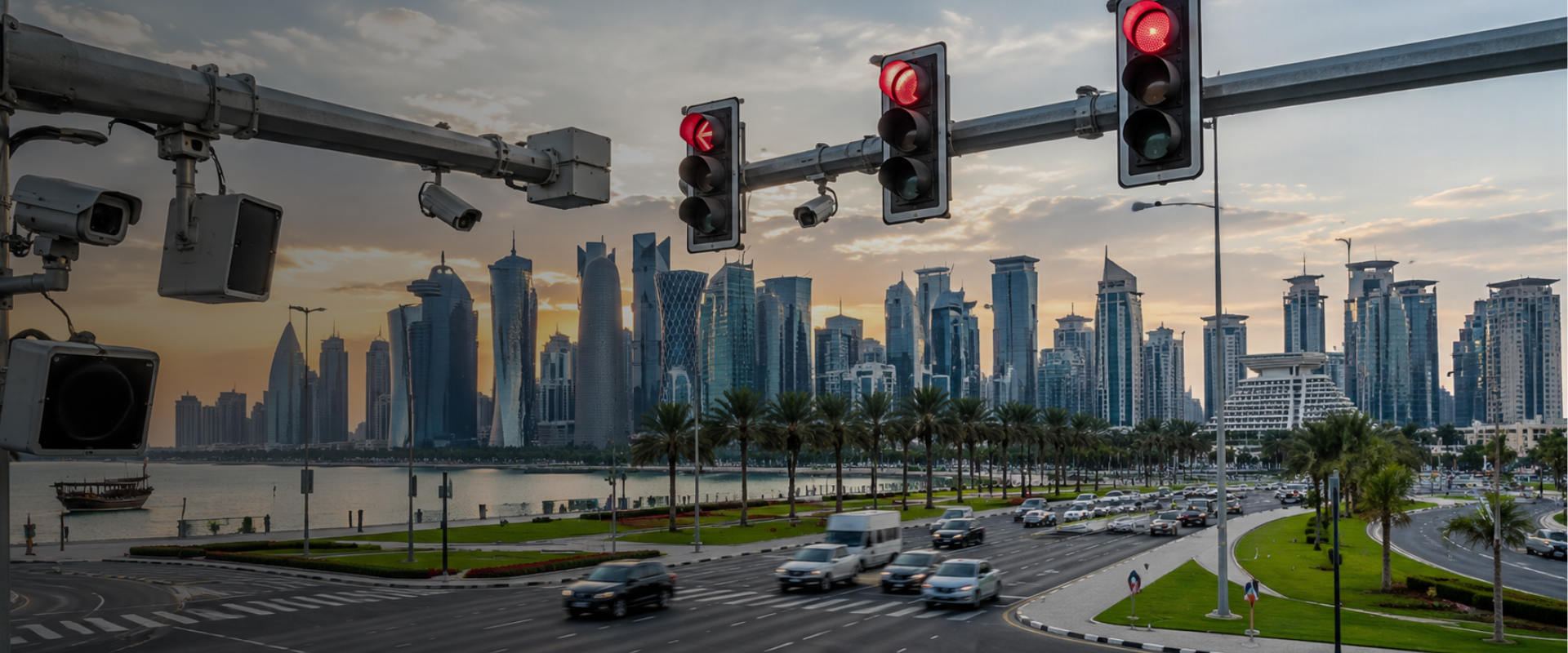
As Qatar’s cities expand and traffic grows, traditional policing is no longer enough to curb speeding and red-light violations. To build safer roads, Qatar is deploying Speed & Red-Light Enforcement Systems powered by AI analytics, high-resolution cameras, ANPR, and radar sensors. Operating 24/7, these systems detect violations instantly and improve compliance without disrupting traffic flow. Discover how automated enforcement is shaping the future of Qatar’s Intelligent Transport System (ITS).
Understanding Speed & Red-Light Enforcement Systems
Speed and red-light enforcement systems are automated traffic monitoring solutions designed to detect vehicles that violate traffic regulations.
Speed Enforcement Systems
Speed enforcement systems monitor vehicle speeds using radar, laser, or sensor-based technologies. When a vehicle exceeds the posted speed limit, the system records the violation automatically.
Red-Light Enforcement Systems
Red-light enforcement cameras monitor signalized intersections to identify vehicles entering the intersection after the traffic signal has turned red.
Strengthening Automated Traffic Enforcement in Qatar
Qatar's expanding road network supports a growing population, increasing commercial activity, and major international events, making road safety and efficient traffic enforcement more important than ever. As traffic volumes continue to rise, traditional enforcement methods alone are no longer sufficient to address evolving transportation challenges.
Automated enforcement systems help combat issues such as excessive speeding, dangerous intersection violations, driver distraction, aggressive driving behavior, high-risk accident locations, and limited enforcement resources. By continuously monitoring roads and intersections using advanced technologies, these systems improve compliance with traffic regulations, reduce the risk of accidents, and enable law enforcement agencies to allocate more resources toward broader Traffic Control & Management Systems, public safety, and incident response initiatives.
How Speed Enforcement Systems Work
Modern speed enforcement systems combine several intelligent technologies to accurately identify speeding vehicles.
- Step 1: Vehicle Detection: The radar or laser sensor continuously measures the speed of approaching vehicles.
- Step 2: Speed Verification: The measured speed is compared with the legal speed limit for that location.
- Step 3: Evidence Capture: If a violation occurs, the camera captures multiple high-resolution images and records key information, including the vehicle's speed and registration number.
- Step 4: Data Processing: The information is securely transmitted to the central traffic management or enforcement platform for validation and reporting.
How Red-Light Enforcement Systems Operate
Red-light enforcement systems monitor traffic signals and vehicle movements simultaneously.
The process typically includes:
- Monitoring the traffic signal phase.
- Detecting vehicles crossing the stop line after the signal turns red.
- Capturing multiple images or video evidence.
- Reading the license plate using ANPR technology.
- Recording the date, time, and location of the violation.
- Sending the information to the enforcement center.
This automated process provides reliable evidence while minimizing human error.
Benefits of Automated Traffic Enforcement
- Improves Road Safety: Drivers are more likely to follow traffic regulations when they know violations are consistently monitored, leading to fewer speeding incidents and safer intersections.
- Encourages Driver Compliance: Automated enforcement promotes long-term behavioral change by increasing adherence to speed limits and traffic signals.
- Reduces Serious Collisions: Excessive speed and red-light running are major contributors to severe road accidents. Continuous monitoring helps reduce these high-risk behaviors.
- Supports Efficient Resource Allocation: Automation allows traffic police and road authorities to focus on accident response, public safety initiatives, and traffic operations rather than routine monitoring.
- Operates 24/7: Unlike manual enforcement, intelligent systems provide continuous monitoring regardless of weather conditions or time of day.
- Provides Reliable Evidence: High-resolution images, timestamped records, and ANPR data ensure accurate documentation of traffic violations.
Integration with Intelligent Transport Systems (ITS)
Speed and red-light enforcement systems become even more effective when integrated with Qatar's broader Intelligent Transport System (ITS) infrastructure. These solutions can seamlessly connect with technologies such as Automatic Number Plate Recognition (ANPR), AI-powered video analytics, traffic monitoring cameras, Dynamic Message Signs (VMS) , adaptive traffic signal control, incident detection systems, centralized traffic management platforms, and traffic data analytics software.
By sharing real-time information across these interconnected systems, road authorities gain comprehensive visibility of traffic conditions, enabling them to detect incidents quickly, respond more efficiently, and make informed operational decisions. For example, data collected from speed and red-light enforcement cameras can help identify accident-prone locations, allowing authorities to improve road design, optimize traffic signal timings, and implement targeted safety measures that enhance overall traffic flow and reduce collision risks.
Supporting Compliance and Infrastructure Planning
Beyond traffic law enforcement, speed and red-light enforcement systems generate valuable traffic intelligence that supports long-term transportation planning and infrastructure development. By collecting and analyzing data such as speed trends, peak traffic periods, violation hotspots, traffic density, vehicle classifications, intersection performance, and road safety statistics, road authorities gain deeper insights into how the road network is being used.
This data enables planners to identify high-risk locations, prioritize infrastructure improvements, optimize enforcement strategies, evaluate the effectiveness of road safety initiatives, and make informed decisions that enhance traffic efficiency, reduce accidents, and support the development of safer and more sustainable transportation systems across Qatar.
Best Practices for Road Authorities
To maximize the effectiveness of speed and red-light enforcement systems, road authorities should consider the following best practices:
- Install systems at high-risk intersections and accident-prone corridors.
- Conduct regular calibration and maintenance of sensors and cameras.
- Integrate enforcement systems with centralized traffic management platforms.
- Use collected data to identify recurring safety issues.
- Combine enforcement with public awareness campaigns to encourage responsible driving.
- Review system performance periodically to ensure accuracy and compliance with operational standards.
Conclusion
As Qatar modernizes its transportation network, Speed & Red-Light Enforcement Systems are vital for safer roads and smarter traffic flow. Powered by AI, radar, ANPR, and centralized ITS monitoring, these automated systems pinpoint violations in real time while capturing key data to improve future urban planning.
Looking to deploy advanced traffic enforcement in Qatar? KTC Qatar provides end-to-end Traffic Monitoring & Law Enforcement Systems , integrating AI video analytics, ANPR, radar technology, and smart Intelligent Transport Systems (ITS) to enhance road safety, automate traffic enforcement, and keep cities moving forward. Explore our Projects or Contact KTC Qatar to learn more about our intelligent transportation solutions.