Our Blogs
Latest Articles & Insights
Blogs
Qatar's Drainage Infrastructure Crisis: How Contractors Are Engineering Solutions for Urban Flooding
Although Qatar is known for its arid desert climate, heavy seasonal rainfall can quickly expose one of the country's biggest urban infrastructure challenges stormwater drainage. While rainfall events are relatively infrequent, they are often intense enough to overwhelm drainage networks, resulting in waterlogged roads, traffic disruptions, and damage to public infrastructure.
As Qatar continues to expand its cities, highways, industrial zones, and residential communities, effective drainage infrastructure has become essential for ensuring safe transportation, protecting public assets, and supporting sustainable urban development. Modern drainage contractors now play a critical role in designing, constructing, and maintaining resilient stormwater systems capable of managing both today's demands and future urban growth.
In this article, we explore the challenges behind urban flooding in Qatar, the engineering solutions transforming drainage infrastructure, and how experienced contractors are helping build safer, smarter, and more resilient cities.
Understanding Qatar's Drainage Infrastructure Challenges
Unlike countries that experience regular rainfall throughout the year, Qatar receives limited annual precipitation concentrated within a few heavy storms. During these events, large volumes of rainwater accumulate rapidly on roads, parking areas, residential communities, and commercial developments.
Modern cities are built with extensive paved surfaces such as asphalt roads, concrete pavements, and rooftops that prevent rainwater from naturally infiltrating the ground. Instead, stormwater flows across these surfaces and must be collected and transported efficiently through engineered drainage systems.
Without sufficient drainage capacity, even relatively short rainfall events can lead to localized flooding, traffic congestion, infrastructure damage, and interruptions to daily activities.
Why Urban Flooding is Becoming a Growing Concern in Qatar
Qatar's rapid urban development has significantly increased the demand for modern drainage infrastructure. New highways, residential developments, commercial districts, industrial facilities, and public utilities require drainage systems that can effectively manage surface runoff while protecting surrounding infrastructure.
Several factors contribute to urban flooding across rapidly developing cities:
- Rapid Urban Expansion: Continuous construction replaces natural landscapes with impervious surfaces that generate higher stormwater runoff.
- Changing Rainfall Patterns: Seasonal storms often produce intense rainfall within short periods, placing significant pressure on drainage networks.
- Growing Infrastructure: Larger transportation networks and public developments require more sophisticated stormwater management systems.
- Groundwater Challenges: Certain areas experience rising groundwater levels that require integrated drainage and dewatering solutions.
- Aging Drainage Assets: Older drainage networks may require rehabilitation or upgrading to accommodate increasing urban demands.
These challenges highlight the need for reliable drainage infrastructure capable of supporting Qatar's long-term urban development.
How Modern Drainage Contractors are Solving Flooding Challenges
Today's drainage contractors provide far more than pipe installation. They deliver comprehensive engineering solutions that combine planning, hydraulic design, construction, testing, and long-term maintenance to ensure drainage systems operate efficiently throughout their lifecycle.
Key engineering services typically include:
- Stormwater drainage network construction
- Underground pipeline installation
- Surface water collection systems
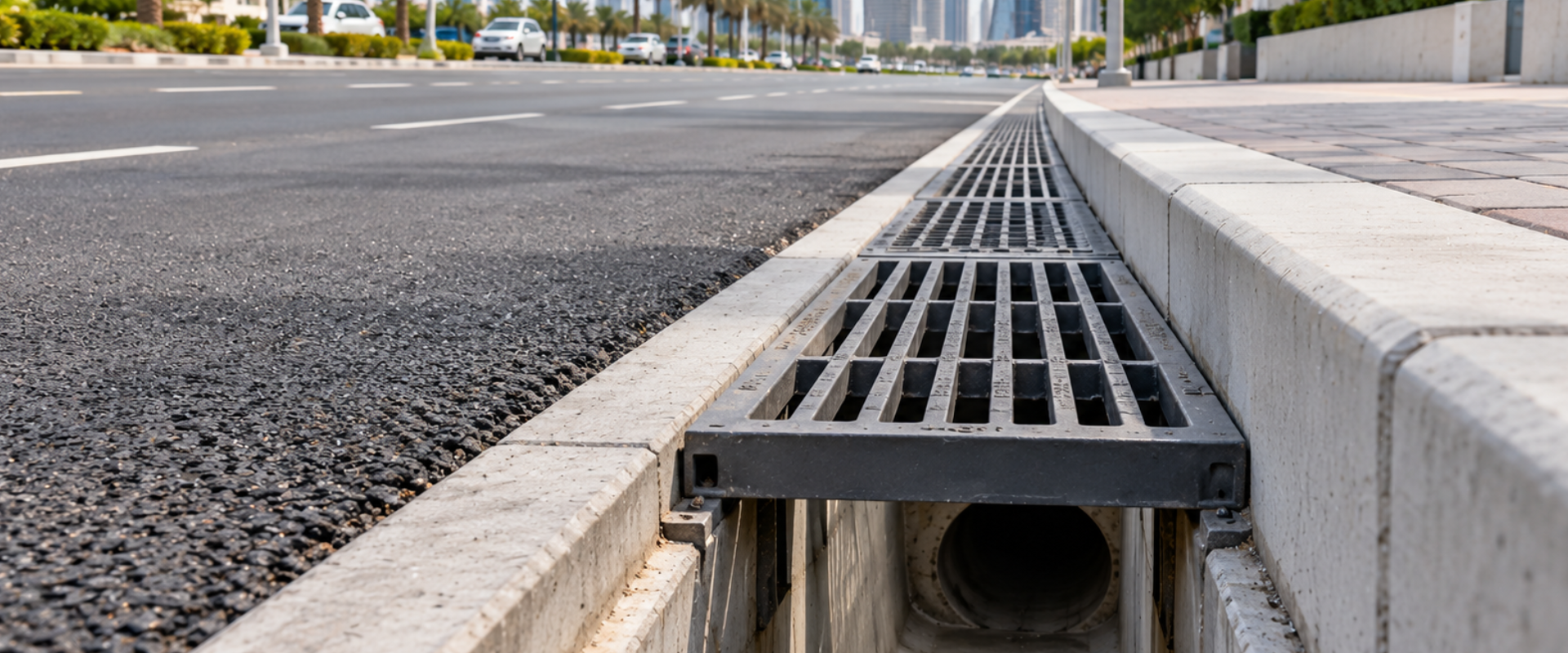
- Road drainage infrastructure
- Culverts and catch basin installation
- Manholes and inspection chambers
- Pumping station construction
- Drainage rehabilitation and maintenance
By integrating these systems into broader infrastructure projects, contractors help reduce flood risks while improving the resilience of transportation networks and urban developments.
Advanced Drainage Technologies Used in Qatar
Modern drainage infrastructure relies on advanced engineering techniques to improve efficiency, reliability, and long-term performance. Contractors increasingly utilize digital tools and innovative construction methods to deliver smarter drainage solutions.
Hydraulic Modelling
Before construction begins, engineers simulate rainfall events and stormwater flow using hydraulic modelling software. These simulations help determine appropriate pipe sizes, drainage capacities, and network layouts to ensure efficient water conveyance.
Underground Drainage Networks
Large underground drainage pipelines transport stormwater away from roads and urban developments while minimizing disruption to surrounding infrastructure. Properly designed underground systems improve reliability and maximize land use.
Pumping Stations
In low-lying areas where gravity drainage alone is insufficient, pumping stations automatically remove accumulated stormwater and discharge it safely into designated drainage networks.
Smart Monitoring Systems
Modern drainage assets increasingly incorporate sensors and remote monitoring technologies that continuously track water levels, equipment performance, and system conditions. These solutions enable operators to identify potential issues before they escalate into major problems.
CCTV Drainage Inspection
Specialized inspection cameras allow contractors to assess underground pipelines without excavation. CCTV inspections help identify blockages, cracks, root intrusion, sediment accumulation, and structural defects, enabling timely maintenance and reducing operational costs.
Benefits of Modern Drainage Infrastructure
Investing in modern drainage infrastructure provides long-term benefits for cities, businesses, and public authorities.
- Reduces Urban Flooding: Efficient stormwater collection and conveyance minimize flooding during heavy rainfall events.
- Protects Roads and Infrastructure: Proper drainage prevents pavement deterioration, erosion, and structural damage caused by standing water.
- Improves Public Safety: Dry roads reduce accident risks while maintaining safer travel conditions for motorists and pedestrians.
- Supports Sustainable Development: Well-designed drainage systems contribute to resilient, environmentally responsible urban planning.
- Extends Infrastructure Life: Effective water management reduces long-term maintenance costs and increases the lifespan of roads and utilities.
- Enhances Business Continuity: Reliable drainage minimizes operational disruptions for commercial, industrial, and residential developments.
The Role of Drainage Contractors in Large Infrastructure Projects
Drainage infrastructure forms an essential component of nearly every civil engineering project. Experienced contractors work alongside consultants, developers, and government authorities to ensure drainage systems integrate seamlessly with transportation, utility, and public infrastructure.
Their responsibilities typically include:
- Site investigations and drainage assessments
- Engineering design support
- Excavation and trenching works
- Pipeline installation and utility coordination
- Construction of manholes and drainage structures
- Testing and commissioning
- Preventive maintenance programs
- Emergency drainage response services
Through careful planning and quality construction practices, contractors ensure drainage assets continue delivering reliable performance throughout their operational life.
Supporting Sustainable Urban Development in Qatar
As Qatar advances its long-term infrastructure goals, drainage systems are becoming increasingly integrated with sustainable urban planning initiatives. Modern projects prioritize efficient water management, resilient infrastructure, and environmentally responsible engineering practices.
Contractors contribute by incorporating innovative construction techniques, durable materials, and intelligent monitoring systems that reduce maintenance requirements while improving overall network efficiency.
By investing in resilient drainage infrastructure today, Qatar is better positioned to accommodate future urban expansion, protect public assets, and maintain safe transportation networks for generations to come.
Choosing the Right Drainage Contractor in Qatar
Selecting an experienced drainage contractor is critical to the success of any infrastructure project. A qualified contractor brings technical expertise, modern equipment, and a thorough understanding of local engineering standards to every stage of project delivery.
When evaluating potential contractors, consider the following:
- Proven experience in drainage and infrastructure projects
- Knowledge of local engineering regulations and standards
- Capability to deliver complex underground utility works
- Access to modern construction equipment and technologies
- Strong quality assurance and safety practices
- Comprehensive maintenance and support services
Partnering with an experienced contractor helps ensure drainage systems perform efficiently while minimizing future operational and maintenance costs.
Conclusion
As Qatar's cities continue to grow, effective drainage infrastructure has become a cornerstone of resilient urban development. From managing stormwater and protecting transportation networks to safeguarding public infrastructure and supporting sustainable growth, modern drainage systems play an essential role in building safer communities.
KTC Qatar delivers reliable infrastructure solutions that support the development of modern drainage networks across the country. From underground utility installations and stormwater drainage systems to large-scale civil infrastructure projects, our experienced engineering teams provide end-to-end solutions designed for long-term performance, safety, and sustainability. Explore our Projects to learn how we can support your next infrastructure project.