Our Blogs
Latest Articles & Insights
Blogs
How Smart Traffic Signal Synchronization Is Reducing Congestion in Qatar's Cities
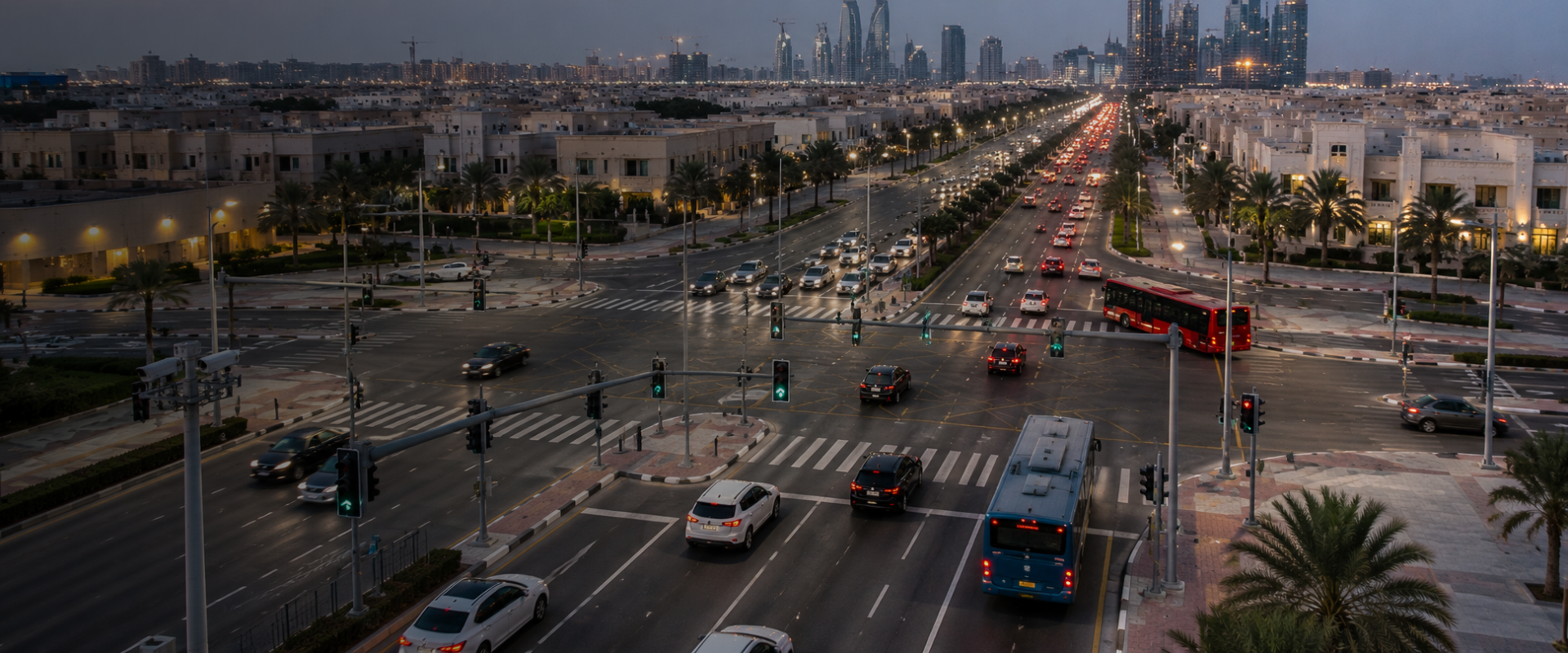
As Qatar’s rapid urban development drives up vehicle volumes across residential, commercial, and industrial zones, Smart Traffic Signal Synchronization has become essential to preventing congestion, travel delays, higher fuel consumption, and rising emissions. Unlike traditional fixed-timer signals, this advanced Intelligent Transport System (ITS) technology coordinates traffic lights in real time to dynamically adapt to shifting traffic patterns, streamlining vehicle flow through intersections and serving as a vital pillar of Qatar’s smart mobility strategy.
What Is Smart Traffic Signal Synchronization?
Smart Traffic Signal Synchronization is the process of connecting multiple traffic signals through a centralized traffic management system that coordinates green, yellow, and red-light timings based on real-time traffic conditions.
The system uses live data collected from:
- Traffic detection cameras
- Radar sensors
- Inductive loop detectors
- AI-powered video analytics
- Vehicle counting sensors
- Automatic Number Plate Recognition (ANPR) cameras
- Connected traffic controllers
Using this information, signal timings are automatically adjusted to reduce unnecessary stops and improve vehicle movement throughout the road network.
Significance of Smart Traffic Signal Management in Qatar
Qatar's rapidly expanding cities require transportation infrastructure that can accommodate increasing traffic demand while maintaining high standards of safety and operational efficiency. Rapid urban development has led to the growth of residential communities, expanding commercial districts, new industrial zones, higher vehicle ownership, increased freight transportation, and the construction of major sporting and entertainment venues. These evolving traffic patterns create fluctuating demand throughout the day, making traditional fixed-time traffic signals less effective during peak hours, public events, and unexpected incidents. Smart traffic signal synchronization addresses these challenges by dynamically adjusting signal timings based on real-time traffic conditions, enabling road authorities to reduce congestion, minimize travel delays, improve road safety, and deliver a smoother, more efficient driving experience across Qatar's transportation network.
How Smart Traffic Signal Synchronization Works
A modern Smart Traffic Signal Synchronization system combines multiple intelligent technologies to optimize traffic flow in real time.
- Step 1: Detect Traffic: Sensors and cameras continuously monitor traffic volumes, queue lengths, and vehicle speeds across the road network.
- Step 2: Analyze Traffic Conditions: The central Traffic Management Platform processes incoming data using predefined traffic algorithms and AI-based optimization.
- Step 3: Optimize Signal Timings: Green light durations are automatically adjusted based on real-time traffic demand to improve traffic flow.
- Step 4: Coordinate Adjacent Intersections: Neighboring traffic signals communicate to create a "green wave," allowing vehicles to travel through multiple intersections with fewer unnecessary stops.
- Step 5: Continuous Monitoring: The system continuously updates signal timings as traffic conditions change throughout the day.
Key Benefits of Smart Traffic Signal Synchronization
- Reduces Traffic Congestion: Coordinated traffic signals minimize stop-and-go driving, allowing vehicles to move more efficiently through busy intersections.
- Shorter Travel Times: Drivers spend less time waiting at red lights, improving daily commutes and reducing delays for commercial transportation.
- Improves Road Safety: Efficient signal coordination reduces sudden braking, intersection conflicts, and driver frustration while complementing advanced Traffic Monitoring & Law Enforcement Systems.
- Lower Fuel Consumption: Maintaining smoother traffic flow reduces unnecessary acceleration and idling, helping vehicles consume less fuel.
- Reduces Vehicle Emissions: Improved traffic movement decreases engine idling, lowering carbon emissions and supporting Qatar's sustainability goals.
- Better Emergency Response: Emergency vehicles such as ambulances and fire services can receive signal priority, allowing them to travel through intersections more quickly during critical situations.
Applications Across Qatar's Growing Cities
- Urban Intersections: Manage high traffic volumes during peak commuting hours.
- Business Districts: Improve access to commercial centers while minimizing congestion.
- Residential Communities: Reduce delays for residents entering and exiting neighborhoods.
- School Zones: Enhance pedestrian safety and manage school-hour traffic.
- Industrial Areas: Support efficient freight movement and heavy vehicle traffic.
- Airport Corridors: Improve traffic flow along routes connecting airports and major highways.
The Role of Artificial Intelligence in Traffic Signal Optimization
Artificial Intelligence (AI) is revolutionizing traffic signal management by enabling systems to analyze both historical and real-time traffic data, allowing intersections to adapt dynamically to changing road conditions. AI-powered traffic management can predict traffic congestion before it occurs, adjust signal timings based on weather conditions, respond instantly to road incidents, prioritize public transport and emergency vehicles, optimize traffic flow during major events, and continuously improve signal performance through machine learning. By making intelligent, data-driven decisions in real time, these advanced capabilities shift traffic management from a reactive approach to a proactive one, helping cities reduce congestion, improve road safety, and operate more efficiently.
Supporting Qatar's Smart Mobility Vision
As Qatar advances its digital transformation and smart city initiatives, intelligent traffic management plays an important role in creating sustainable transportation systems.
Smart traffic signal synchronization contributes by:
- Improving mobility for residents and visitors.
- Supporting economic productivity through reduced travel delays.
- Enhancing road safety.
- Lowering environmental impact.
- Increasing the efficiency of public infrastructure.
- Preparing cities for connected and autonomous vehicle technologies.
By investing in adaptive traffic solutions today, Qatar is building a transportation network capable of supporting future urban growth.
Future Trends in Smart Traffic Signal Technology
Traffic signal systems continue to evolve as emerging technologies reshape the future of urban mobility and intelligent transportation. Innovations such as AI-driven predictive traffic management, Vehicle-to-Infrastructure (V2I) communication, connected autonomous vehicle integration, cloud-based traffic management platforms, digital twin simulations for traffic planning, and real-time multimodal transportation coordination are enabling road authorities to manage traffic more proactively and efficiently. These advanced technologies will help cities become more resilient, reduce congestion, improve road safety, optimize transportation networks, and respond more effectively to changing mobility demands, supporting the development of smarter and more sustainable urban environments.
Conclusion
Efficient traffic management is essential for supporting Qatar's rapidly growing urban landscape. Smart Traffic Signal Synchronization enables road authorities to optimize traffic flow, reduce congestion, improve road safety, and minimize environmental impact through real-time, data-driven traffic control.
As part of Qatar's broader Intelligent Transport System (ITS) strategy, synchronized traffic signals are helping create smarter, safer, and more sustainable cities. By integrating AI, traffic analytics, and adaptive control technologies, Qatar is laying the foundation for a future-ready transportation network. Looking to deploy advanced Smart Traffic Signal Synchronization solutions in Qatar? KTC Qatar delivers intelligent traffic management systems, adaptive signal control, and integrated infrastructure solutions designed to improve traffic flow, enhance road safety, and support the country's smart mobility vision.