Our Blogs
Latest Articles & Insights
Blogs
How Dynamic Message Signs Kept Traffic Moving During Qatar's Mega-Events
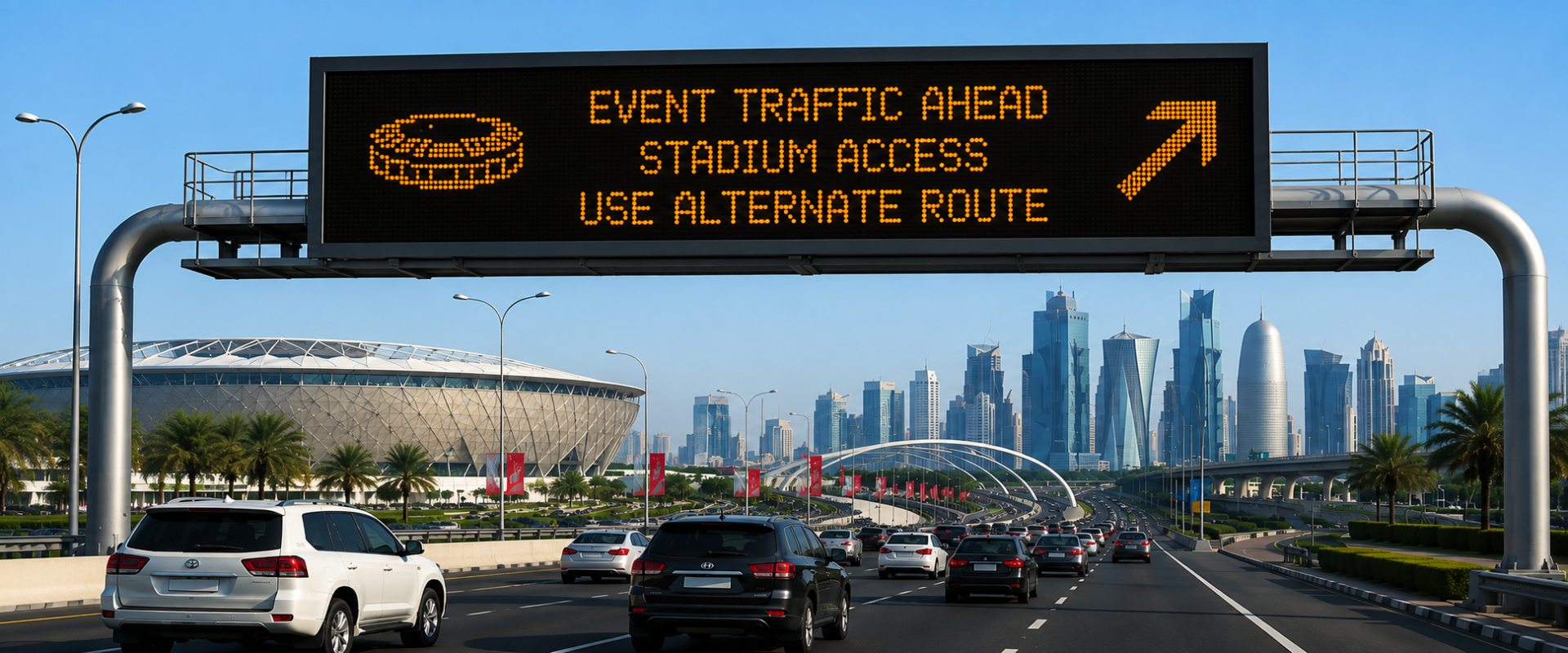
Hosting global events such as the FIFA World Cup Qatar 2022, AFC Asian Cup, Formula 1 Qatar Grand Prix, and numerous international exhibitions placed enormous pressure on Qatar's transportation network. With hundreds of thousands of visitors travelling between stadiums, airports, fan zones, hotels, and entertainment venues, managing traffic efficiently became a national priority.
One of the most important technologies supporting this effort was the Dynamic Message Sign (DMS) system. These intelligent electronic displays provided motorists with live traffic updates, route guidance, travel times, and safety alerts, helping reduce congestion while improving the overall driving experience.
Today, Dynamic Message Signs continue to play a major role in Qatar's Intelligent Transportation System (ITS), ensuring smoother journeys during large-scale events and everyday traffic operations.
What Are Dynamic Message Signs?
Dynamic Message Signs (DMS), also known as Variable Message Signs (VMS), are electronic display boards installed above or beside roads to communicate real-time traffic information to motorists.
Unlike traditional static road signs, DMS can be updated instantly through a Traffic Management System (TMS), allowing transportation authorities to respond quickly to changing road conditions and traffic situations.
Common information displayed on Dynamic Message Signs includes:
- Travel Time Estimates: Displaying estimated travel times to key destinations.
- Traffic Congestion Alerts: Warning drivers about heavy traffic ahead.
- Road Closures: Informing motorists about temporary or permanent road closures.
- Lane Restrictions: Notifying drivers of closed or restricted lanes.
- Accident Notifications: Providing advance warnings of traffic incidents and collisions.
- Weather Warnings: Displaying alerts for fog, heavy rain, strong winds, or other hazardous weather conditions.
- Event Traffic Guidance: Directing motorists during sporting events, concerts, exhibitions, and other large gatherings.
- Alternative Route Recommendations: Suggesting less congested routes to improve traffic flow.
- Speed Management Messages: Advising drivers of recommended or temporary speed limits.
- Safety Reminders: Promoting safe driving practices through important road safety messages.
By delivering timely and accurate information, Dynamic Message Signs help motorists make informed driving decisions before reaching congested or affected areas, improving both traffic efficiency and road safety.
Why Mega-Events Need Dynamic Message Signs
Large international events create unique traffic challenges that standard road signage cannot effectively address.
During mega-events, authorities must manage:
- Sudden Increases in Traffic Volume: Manage heavy traffic during peak event hours by providing real-time route guidance and congestion updates.
- Temporary Road Closures: Inform motorists about closed roads and direct them to safe alternative routes instantly.
- Dedicated Shuttle Routes: Guide drivers away from shuttle-only lanes while ensuring efficient movement of public transport services.
- VIP and Emergency Vehicle Movements: Support priority access by notifying motorists of temporary restrictions and encouraging lane discipline.
- Stadium Access Management: Direct visitors to the correct stadium entrances, drop-off zones, and designated access roads.
- Parking Availability: Display real-time parking availability and guide drivers to nearby parking facilities when lots become full.
- Public Transport Coordination: Provide information about Metro stations, Park & Ride locations, and public transport connections to reduce road congestion.
- Crowd Dispersal After Events: Help distribute departing traffic efficiently by recommending optimal exit routes and minimizing post-event congestion.
Because conditions change rapidly, traffic information must also change in real time.
Dynamic Message Signs provide this flexibility, allowing traffic operators to instantly update road users with accurate guidance.
How Dynamic Message Signs Work
Modern DMS systems are connected to an Intelligent Transportation System (ITS) that continuously collects traffic data from multiple sources. that continuously collects traffic data from multiple sources.
- Traffic Monitoring: Traffic cameras, road sensors, GPS data, and connected monitoring systems continuously collect real-time information about vehicle movement, traffic density, and road conditions across the transportation network.
- Traffic Analysis: The Traffic Management Center (TMC) analyzes the collected data to identify congestion, accidents, road closures, travel times, and other incidents that may impact traffic flow.
- Message Creation: Based on the traffic analysis, operators create relevant messages to inform motorists about current road conditions, alternative routes, travel times, safety alerts, or event-related traffic information.
- Instant Display: Once approved, the message is transmitted instantly to selected Dynamic Message Signs, ensuring drivers receive accurate and up-to-date information before reaching affected areas.
- Driver Response: Motorists use the displayed information to make informed driving decisions, choose alternative routes when necessary, reduce delays, and help improve overall traffic flow throughout the road network.
How Dynamic Message Signs Supported Qatar's Mega-Events
During major international events, Dynamic Message Signs (DMS) became an essential communication tool between traffic authorities and motorists. By providing real-time traffic information and route guidance, they helped manage large traffic volumes while improving road safety and travel efficiency.
Dynamic Message Signs supported Qatar's mega-events by:
-
Directing Visitors: Many international visitors were unfamiliar with Qatar's road network. DMS guided drivers to stadium entrances, fan zones, Metro Park & Ride facilities,public parking areas, and alternative routes, ensuring smoother navigation throughout the event.
-
Managing Congestion: When heavy traffic developed near event venues, DMS redirected vehicles to less congested routes before delays became severe, helping reduce bottlenecks and maintain steady traffic flow.
-
Improving Road Safety: Dynamic Message Signs displayed advance warnings about temporary lane closures, traffic diversions, and changing road conditions, allowing motorists to slow down, change lanes safely, and drive with greater confidence.
-
Supporting Emergency Response: During large gatherings, DMS notified drivers about emergency vehicle movements and temporary traffic restrictions, helping maintain clear routes and reducing emergency response times.
-
Communicating Real-Time Updates:Traffic operators instantly updated messages regarding road closures, parking availability, travel times, and alternative routes, ensuring motorists received accurate information without the need for additional physical signage.
Key Benefits of Dynamic Message Signs
- Faster Traffic Flow: Real-time traffic guidance helps distribute vehicles more evenly across the road network, reducing delays and improving overall traffic movement.
- Reduced Congestion: Drivers receive early notifications about traffic build-up, enabling them to choose alternative routes and avoid heavily congested roads.
- Improved Driver Safety: Advance warnings about accidents, roadworks, lane closures, and other hazards allow motorists to react safely and reduce the risk of collisions.
- Better Event Management: Transportation authorities can instantly update traffic information and implement effective traffic control strategies throughout major events.
- Enhanced Visitor Experience: Clear navigation guidance helps visitors quickly locate destinations, parking facilities, and alternative routes, creating a smoother travel experience.
- Lower Environmental Impact: By reducing unnecessary idling and traffic congestion, Dynamic Message Signs contribute to lower fuel consumption and reduced vehicle emissions.
Dynamic Message Signs Beyond Mega-Events
Although Dynamic Message Signs gained significant attention during major international events, they continue to play an important role in Qatar's transportation network throughout the year. Their flexibility makes them valuable for managing everyday traffic as well as planned and unexpected road situations.
Common applications include:
- Daily Commuter Traffic: Providing real-time traffic updates during peak travel hours.
- Highway Incident Management: Alerting motorists about accidents, vehicle breakdowns, and road hazards.
- Airport Access Roads: Guiding drivers to terminals, parking facilities, and alternative routes.
- Construction Zone Management: Displaying lane closures, detours, and reduced speed limits near work zones.
- Holiday Traffic Control: Managing increased traffic volumes during public holidays and seasonal events.
- Weather Advisories: Providing warnings about fog, heavy rain, strong winds, or reduced visibility.
- Public Safety Announcements: Displaying emergency alerts and important travel information.
- Special Event Traffic Planning: Assisting with traffic management during concerts, exhibitions, sporting events, and national celebrations.
- Emergency Evacuation Support: Directing motorists along safe evacuation routes during emergencies.
As Qatar continues expanding its smart transportation infrastructure, Dynamic Message Signs remain a vital component of intelligent traffic management systems.
Integration with Qatar's Intelligent Transportation System
Dynamic Message Signs deliver the greatest benefits when integrated with other Intelligent Transportation System (ITS) technologies. Together, these systems provide traffic authorities with real-time visibility and greater control over road operations.
- Traffic Management Centers (TMC): Centralized monitoring and coordination of traffic operations.
- CCTV Traffic Surveillance: Continuous visual monitoring of traffic conditions and incidents.
- Automatic Incident Detection: Rapid identification of accidents and unexpected traffic disruptions.
- Traffic Signal Control Systems: Coordinated traffic signal operations based on real-time traffic demand.
- Variable Speed Limit Systems: Dynamic speed adjustments to improve traffic flow and road safety.
- Parking Guidance Systems: Directing drivers to available parking spaces and reducing unnecessary circulation.
- Public Transport Information Systems: Providing travel information to support efficient public transportation.
- Road Weather Monitoring: Detecting weather conditions that may impact road safety.
- Emergency Response Systems: Supporting faster emergency coordination and incident management.
By integrating these technologies, Qatar can deliver a safer, more efficient, and smarter transportation network for residents and visitors alike.
Supporting Qatar's Smart City Vision
As Qatar continues investing in smart city initiatives, Dynamic Message Signs play an important role in improving urban mobility, road safety, and sustainable transportation.
Dynamic Message Signs contribute by:
- Improving Transportation Efficiency: Delivering real-time information that optimizes traffic movement across the road network.
- Enhancing Road Safety: Providing early warnings that help reduce accidents and improve driver awareness.
- Reducing Congestion: Helping motorists avoid traffic bottlenecks through dynamic route guidance.
- Supporting Sustainable Mobility: Reducing fuel consumption and vehicle emissions by minimizing unnecessary delays.
- Enabling Data-Driven Traffic Management: Supporting informed traffic decisions using real-time transportation data.
- Improving the Travel Experience: Making journeys more predictable and convenient for residents and visitors.
- Supporting Future Smart City Initiatives: Integrating seamlessly with emerging intelligent transportation technologies.
As transportation demands continue to evolve, Dynamic Message Signs will remain a key technology supporting Qatar's vision for smarter, safer, and more connected cities.
Conclusion
Dynamic Message Signs have proven to be one of the most effective traffic management technologies for supporting both major international events and everyday transportation operations in Qatar. By delivering accurate, real-time information to motorists, these intelligent systems help reduce congestion, improve road safety, and enhance overall traffic efficiency.
As Qatar continues advancing its Intelligent Transportation System and smart city initiatives, Dynamic Message Signs will remain a critical component of modern traffic management. Their ability to communicate real-time updates, guide motorists, and support efficient road operations ensures a safer and more seamless travel experience for residents and visitors alike.